

Occupational health skin disease can cause irreversible damage if not detected early enough. Irritants caused by working conditions such as latex gloves, soaps/cleaning products, chemicals & solvents, resins & oils, amongst others may cause skin damage.
Skin Surveillance & Occupational Health Monitoring
Common Occupations associated with skin disease include construction, paint spraying, food manufacturing, catering, healthcare and agriculture.
We recommend a tiered approach to skin surveillance:
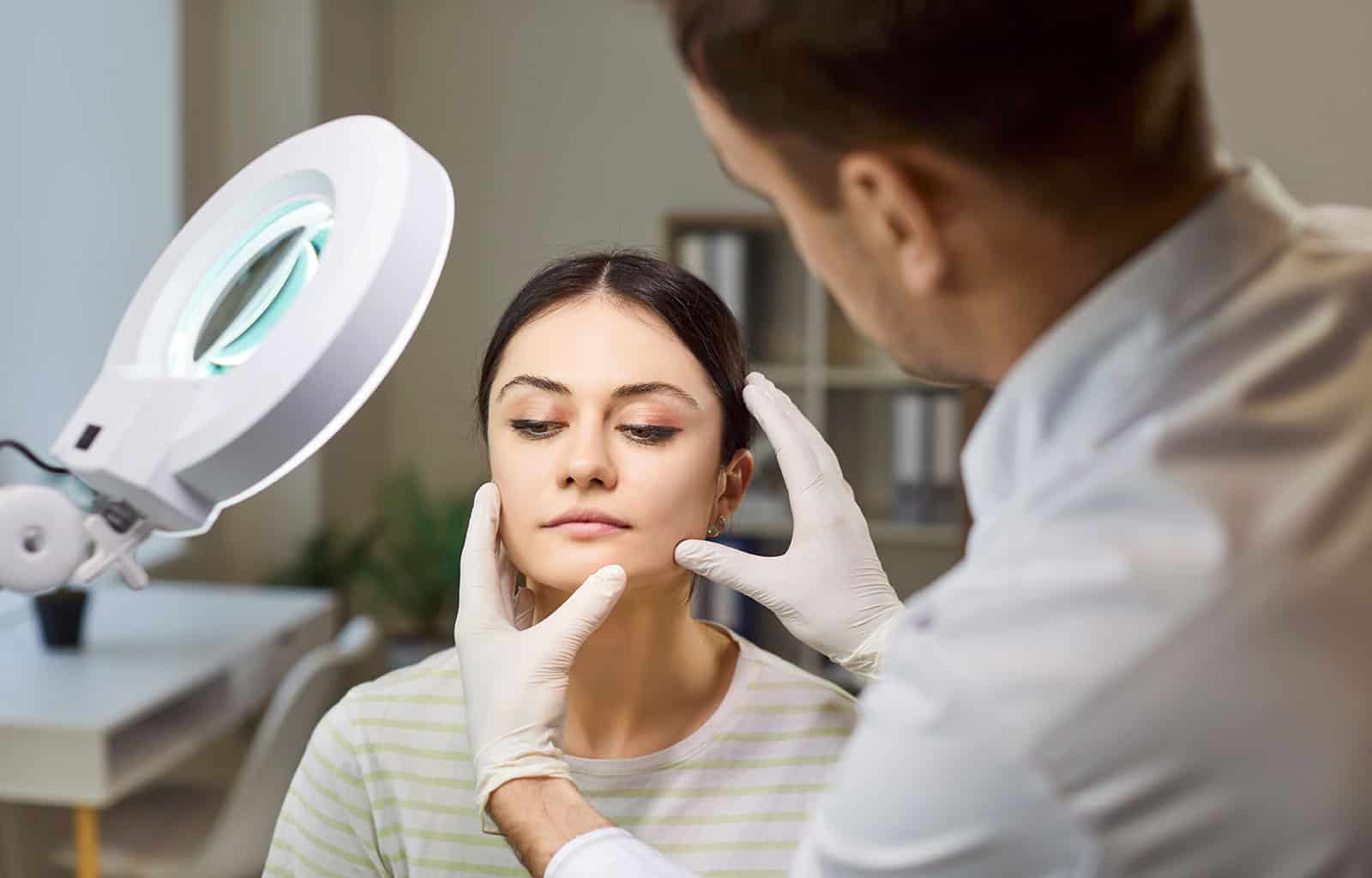
- Skins checks – simple questionnaire and examination of the skin on the hands undertaken by a competent person.
- Skin Investigations – assessment of exposure (work and domestic) and symptoms by qualified and competent Occupational Health professional.
- Doctor assessment – formal investigation and diagnosis by a doctor.

Health surveillance is appropriate when employees are exposed to residual risk of harm from hazardous substances, following all appropriate means of control, and;
- The agent is known to be associated with an identifiable disease or an adverse health effect
- There is a reasonable likelihood that the disease or the effect may occur under the particular conditions of work
- There are valid techniques for detecting indications of the disease or effect.
How often should surveillance be carried out?
Skin surveillance checks are recommended for new starters as a baseline and then regularly at level 2 for the first 6 months as this is the time where we would expect the employee to start to have problems.
Surveillance should then be repeated at the end of the first year and then annually unless more frequent assessment is indicated by the risk assessment.
Investigating skin problems
Where someone is identified as having a skin problem which may be work-related, it needs to be investigated further. This involves checking:
- A full occupational and exposure history
- Past medical history
- The hand care routine
- Symptoms and photographing the problem if current
- Measurements of skin hydration levels
- Workplace exposure / practices / personal protection equipment
We provide the employer and employee with support in eliminating or minimising exposure and management of the skin problem. As skin problems tend to be cumulative, we usually find that the problem is resolved, but may not identify the cause.
However, if the problem is not resolved, a referral to a Consultant Dermatologist with a Specialism in Occupational Skin Disease may be indicated. In some cases, the skin problem may be so severe, that an urgent referral to the Consultant Dermatologist is recommended.
Download our Free Guides
Step by Step guides to implementing a Health Surveillance Programme.

Health Surveillance Brochure
Protecting employees through proactive, nationwide health surveillance that prevents risks and promotes workplace wellbeing.

Implementing a health surveillance programme
Step-by-step guidance to design, implement, and maintain effective, compliant health surveillance across your workforce.
Let’s Get You Started
Our occupational hygiene specialists will guide you from first contact to full deployment without the jargon, delays, or disruption. Complete our quick form and our team will be in touch.
 Sector specific expertisePersonalised partnership tailored to your needsPackages suited to your industry requirementsBespoke account management modelFocus on Data, Sustainability & InnovationLargest Mobile Medical Fleet in UKOnly UK provider to offer Mobile Chest X-RayHundreds of Technicians working across UK & ROI
Don’t Leave It Too Late
Legal compliance isn’t optional—and wellbeing can’t wait. Let’s make sure your university is protected, compliant, and prepared for what’s next.
Fully compliant with HSE regulationsLargest mobile fleet in the UKRapid deployment with minimal downtime
